What is the difference between harm reduction and rehab?
Harm reduction and addiction treatment are not opposites. Harm reduction, such as naloxone, syringe programs and drug checking, aims to keep a person alive and in contact with care while they are still using. Treatment, from detox to residential rehab, aims to stop the use and treat what drives it. Many people need both, in that order.
What is Los Angeles arguing about?
Two stories in the past week put the question in front of every family in the city. On October 30, LAist reported from MacArthur Park, where outreach workers respond to overdoses daily and where, according to the reporting, overdoses outpace every part of Los Angeles except Skid Row. About a fifth of nearby emergency medical calls in recent years were suspected overdoses. Mayor Karen Bass has said she would end the city’s needle exchange, which dates to 1996; Councilmember Nithya Raman, her opponent in the November election, said she would not.
Three days later, LAist reported that the county had quietly stopped distributing syringes and pipes at the Skid Row Care Campus in August, while continuing to hand out naloxone and wound care supplies. Officials call the pause temporary. It comes as the county investigates a cluster of HIV cases around Skid Row, 15 people as of the reporting, and as the county replaces the campus’s main service provider.
Most families reading this do not live near either place. But many of them carry the same private argument at home: if I buy naloxone, am I giving permission? If I insist on rehab, will they stop talking to me?
What does harm reduction actually do?
Harm reduction tries to make the next day survivable. In practice that means naloxone to reverse an overdose, sterile supplies to prevent infections, drug checking, and outreach workers who show up again and again. The CDC has noted that syringe services programs help engage people who use drugs in services, and it has urged the same approach for people who smoke drugs, since smoking became the most common route recorded in overdose deaths by 2022.
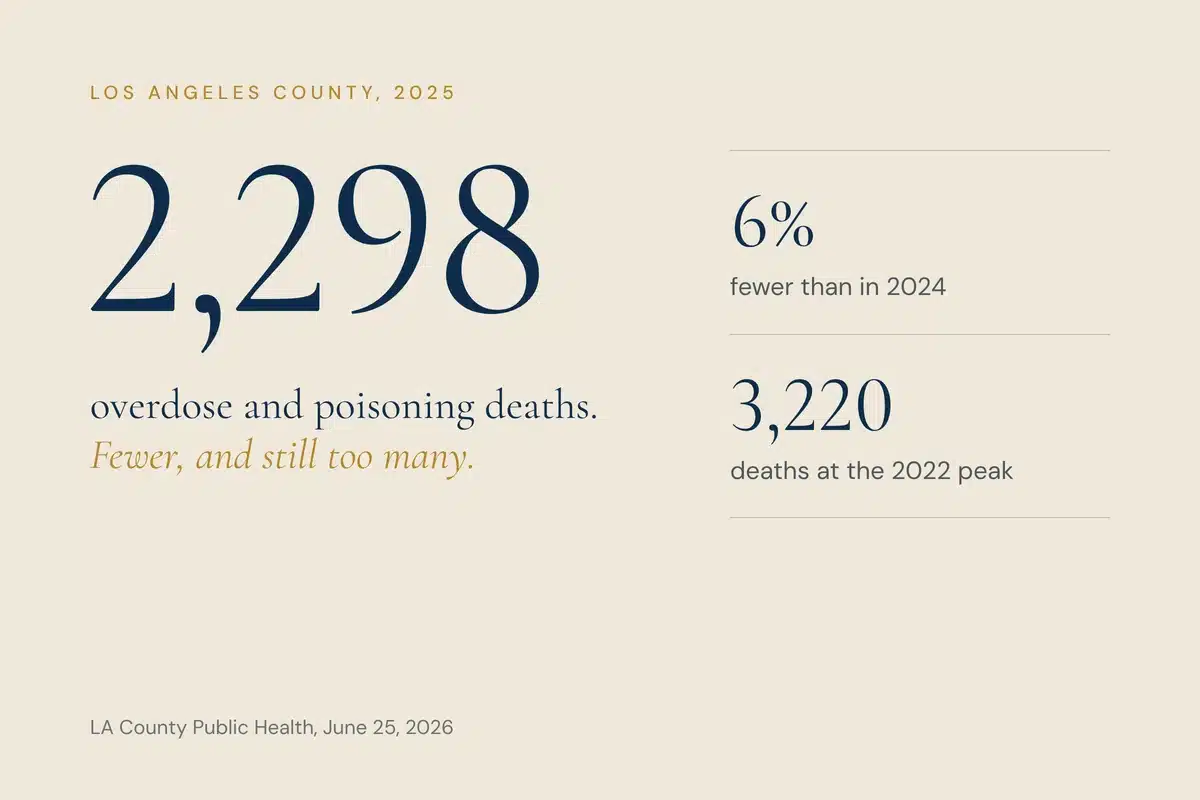
The county’s own numbers show why that work is taken seriously. Los Angeles County recorded 2,298 accidental overdose and poisoning deaths in 2025, according to its June report, down 6 percent from the year before and nearly 30 percent below the 2022 peak of 3,220. The same report promotes naloxone distribution and substance use treatment side by side, through the county’s Fentanyl Frontline campaign.
Does harm reduction keep people from going to rehab?
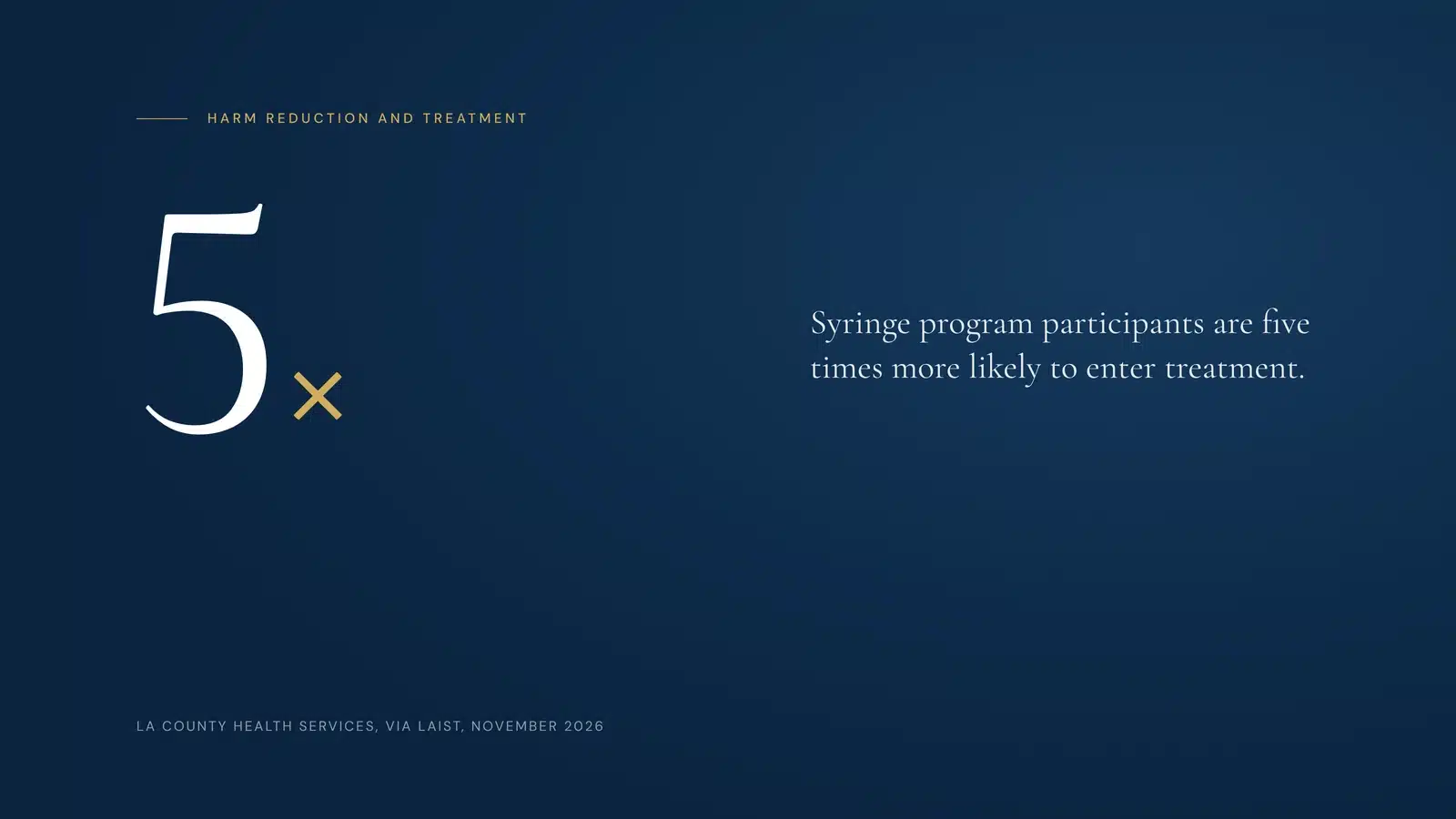
The evidence local officials cite points the other way. In the Skid Row reporting, the county Department of Health Services said syringe program participants are three times more likely to reduce or stop drug use and five times more likely to enter treatment. The reasoning is plain: treatment requires a living person and, usually, a relationship with someone who can make the offer at the right moment.
The MacArthur Park reporting adds an uncomfortable detail. Brett Feldman, who directs USC’s street medicine program, told LAist that many of the people his teams see want treatment but were never offered it. Keeping people alive does not move them into care on its own. Someone still has to ask, and someone has to have a bed ready when the answer is yes.
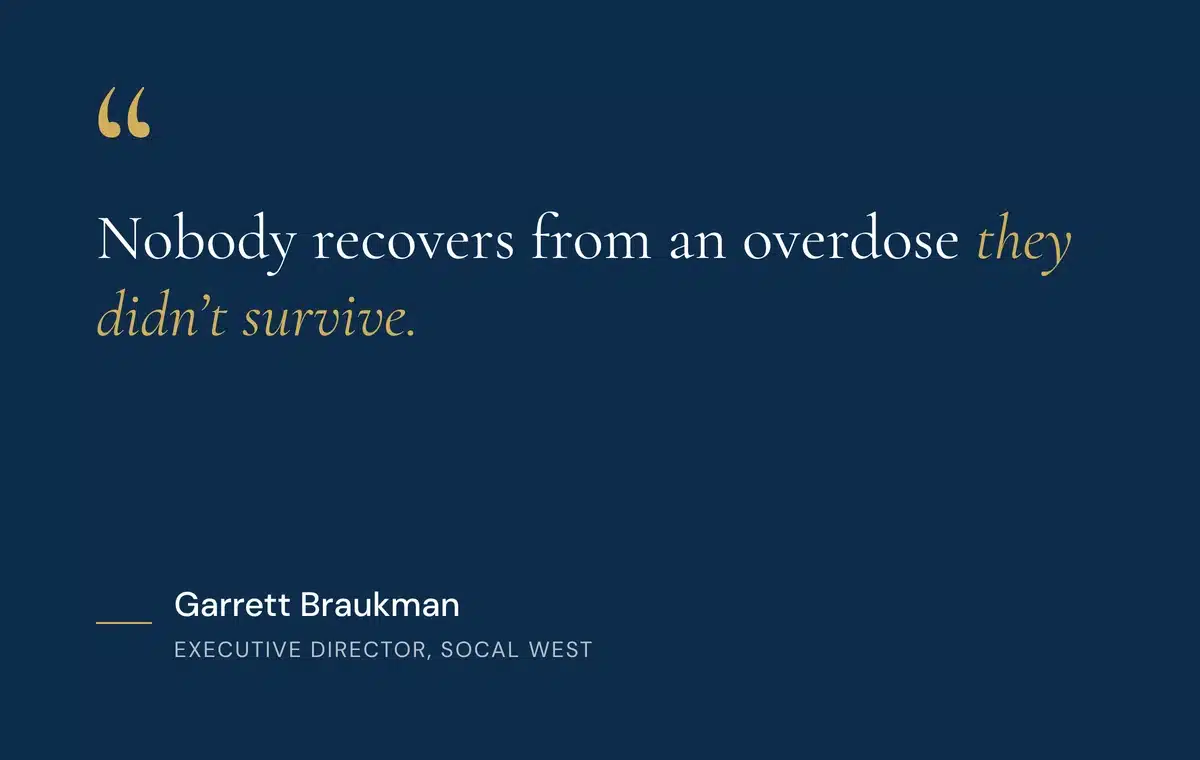
“Nobody recovers from an overdose they didn’t survive. I have spent years around people the music industry lost, and the ones who made it to treatment almost always had someone who kept them alive long enough to say yes.”
Garrett Braukman, Executive Director, SoCal West Region, Emend Healthcare
When is it time to move from staying safe to getting treatment?
There is rarely a perfect moment, but there are clear signals. A recent overdose or a close call. Use that has moved from occasional to daily. Failed attempts to cut back, especially ones that ended in the first days of withdrawal. Work, money or health slipping in ways the person can no longer explain away. Any of these is a reason to stop waiting for a crisis and start talking about care.
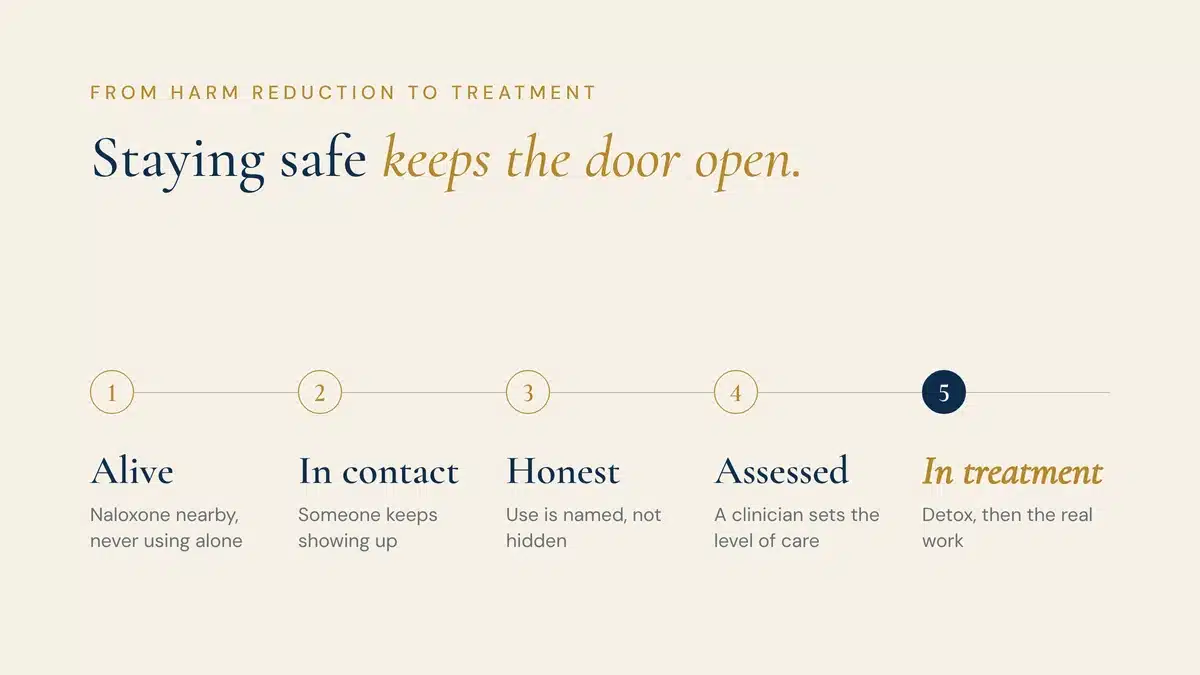
The level of care depends on the person. Someone using fentanyl or other opioids daily usually needs medically supervised detox first, followed by residential treatment or a structured outpatient program. MedlinePlus notes that most people need long-term treatment after opioid detox, from counseling and self-help groups to intensive outpatient care and inpatient treatment. Our guide to levels of care explains each step in plain language.
If you are weighing private options, our page on drug rehab for Los Angeles families describes how detox, residential care and step-down treatment work at our six-bed residence in Encino, about twenty minutes over the hill from the Westside, Hollywood and Downtown.
Why keep naloxone in the house even after rehab starts?
Because the most dangerous moment often comes after a period of not using. MedlinePlus explains that most opioid overdose deaths occur in people who have just detoxed, since withdrawal lowers tolerance and a much smaller dose can now be fatal. A family that keeps naloxone at home during and after treatment is not expecting failure. It is planning for the one week when the plan might not hold.
“Keeping someone safe and asking them to get help are not competing messages. The families who do best tell their person both things, and keep saying them.”
Brett Cronon, Counselor, My Limitless Journeys
Where does a private residence like My Limitless Journeys fit?
We are a treatment program, not a harm reduction provider, and we are glad both exist. My Limitless Journeys is a six-bed residence in Encino, licensed by the California Department of Health Care Services (license 191135CP) and accredited by The Joint Commission. Care begins with on-site medically supervised detox and continues into our residential treatment program, then partial hospitalization, intensive outpatient care and alumni support, with the same clinical team throughout.
Families from across the city reach us at the point when staying safe is no longer enough. Our page on private drug rehab in Los Angeles covers what admission involves, and the Los Angeles location overview shows every level of care available to the city from the Encino residence. If cost is the first question, a confidential benefits check takes a few minutes and commits you to nothing. If you are not sure where to start, SAMHSA’s free and confidential National Helpline, 1-800-662-4357, refers families to treatment in any state.
Frequently asked questions
Is harm reduction the same as enabling?
No. Enabling protects the drug use itself, such as covering debts or excusing missed work. Harm reduction protects the person, by keeping naloxone nearby or making sure they never use alone, so that recovery stays possible. A family can refuse to fund use and still keep a person alive.
Does a syringe program make people use more?
Los Angeles County Health Services says the opposite: syringe program participants are three times more likely to reduce or stop drug use and five times more likely to enter treatment. These programs also hand out naloxone and connect people to medical care, which is often where a first conversation about treatment begins.
Can someone go straight from the street or a daily habit into rehab?
Often, yes, though detox usually comes first. A person using fentanyl or other opioids daily needs medically supervised withdrawal before residential or outpatient treatment. A good program will assess the person, explain the level of care it recommends and refer elsewhere if it is not the right fit.
Where can a Los Angeles family get help today?
The county’s Substance Abuse Service Helpline, 800-854-7771, connects residents to treatment, and SAMHSA’s National Helpline, 1-800-662-4357, offers free, confidential referrals. Our admissions team can also talk through detox, residential care and insurance during business hours, whether or not we are the right fit.
When staying safe is no longer enough, talk with our team about detox and residential care at a private six-bed home, and about what the weeks after look like.
This article is general information, not a diagnosis or a substitute for an assessment by a clinician. If someone is in immediate danger, call 911. In a mental health or substance use crisis, call or text 988.
Sources
- Rynning, J. “At MacArthur Park, aid workers face an endless cycle of overdoses, and a system that can’t keep up.” LAist, October 30, 2026. laist.com
- Schrank, A. “LA County pauses syringe and pipe handouts at Skid Row services hub.” LAist, November 2, 2026. laist.com
- County of Los Angeles, “Drug-Related Overdose Deaths in LA County Continue to Fall,” June 25, 2026. lacounty.gov
- Tanz LJ, Gladden RM, Dinwiddie AT, et al. “Routes of Drug Use Among Drug Overdose Deaths, United States, 2020 to 2022.” Morbidity and Mortality Weekly Report, 2024;73:124 to 130. cdc.gov
- MedlinePlus Medical Encyclopedia, “Opiate and opioid withdrawal,” U.S. National Library of Medicine, reviewed May 15, 2026. medlineplus.gov
- SAMHSA, National Helpline, 1-800-662-HELP (4357). samhsa.gov
Every article on this site is written by our editorial team and reviewed by a licensed clinician. Read how we write and review content.
Keep reading: Drug rehab for Los Angeles families · When a loved one refuses treatment · Smoking fentanyl: withdrawal and detox · Cychlorphine in Los Angeles